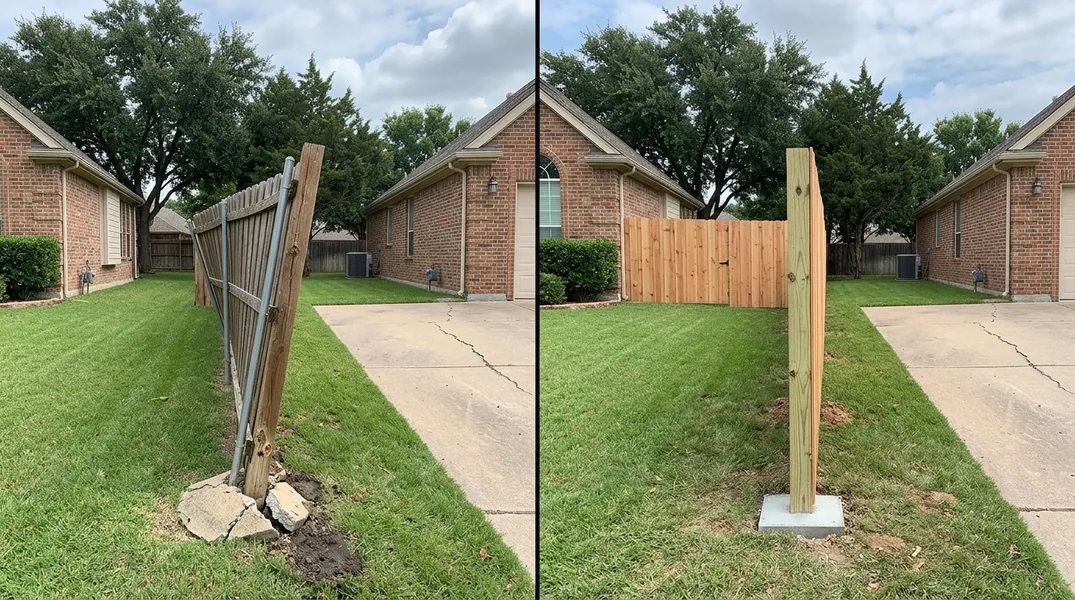
Why Fences Lean in Plano: Understanding Gulf Clay Soil
If you own a home in Plano, you've probably noticed that some fences in the neighborhood seem to tilt or lean over time. This isn't just a cosmetic problem or the result of poor installation. The real culprit lies beneath the surface: Gulf Coast clay soil. Plano sits in a region where clay-heavy soil dominates, and this soil behaves very differently from sandy or loamy soil found in other parts of the country.
Clay soil expands when it absorbs water and contracts when it dries out. During heavy rains or seasonal flooding, the soil around your fence posts swells, pushing against the post and shifting its position. When the weather turns dry, the soil shrinks, creating voids and leaving the post unstable. This constant cycle of expansion and contraction gradually destabilizes fence posts, causing them to shift, tilt, and eventually lean. Add poor drainage or standing water around the fence line, and the problem accelerates dramatically. Homeowners who invest in Wood & Privacy Fence Installation often don't realize that the soil conditions in their yard will play a major role in how long their fence lasts.
Rotted Fence Posts: The Silent Destroyer
Even if your fence posts were installed correctly and set deep enough, they can still fail if they're not protected from moisture. Rotted fence posts are one of the leading causes of leaning fences in residential areas. When wood posts remain in contact with wet soil for extended periods, the wood fibers begin to break down. Rot typically starts at ground level, where the post meets the soil, because this is where moisture is most concentrated and where the wood has the least protection from the elements.
The rot weakens the structural integrity of the post from the inside out. A post that looks solid on the surface may be completely hollow or severely compromised just a few inches below ground. As the wood deteriorates, it loses its ability to support the weight of the fence panels and rails. The post becomes flexible and unstable, and any wind or pressure will cause it to lean. Many homeowners don't discover rotted posts until the fence is already visibly tilted or panels have begun to sag. This is why Plano homeowners should inspect their fences regularly, especially after periods of heavy rain or if they notice any unusual movement or leaning.
Leaning Fence Repair: When You Need Professional Help
A leaning fence is not something you should ignore or attempt to fix with temporary patches. The longer you wait, the worse the problem becomes. A fence that's already leaning has lost its structural integrity, and the damage spreads to adjacent posts and panels. If one post fails, the stress transfers to neighboring posts, causing a domino effect of failures. This is why leaning fence repair should be addressed as soon as you notice the problem.
The first step in repairing a leaning fence is to determine whether the posts can be saved or if they need to be replaced entirely. This requires a professional inspection. A qualified fence contractor can dig around the base of the post, assess the extent of rot or soil damage, and recommend the best course of action. Sometimes a post can be straightened and reinforced, but more often, especially if rot is present, replacement is the only lasting solution. Attempting to straighten a fence yourself without addressing the underlying cause will result in the same problem recurring within months.
Fence Post Replacement: The Right Way to Fix It
Fence post replacement is not a simple DIY task, even though some homeowners try to tackle it themselves. The process requires proper equipment, knowledge of local soil conditions, and understanding of how to install posts that will withstand the specific challenges of your area. When Plano Fence Company performs fence post replacement, we don't just pull out the old post and drop in a new one. We assess the soil, ensure proper drainage, use appropriate materials, and install the post to the correct depth and angle to prevent future failure.
The first step is removing the damaged post. This means carefully removing or cutting the rails and panels that are attached to it, then extracting the old post from the ground. If the post is severely rotted, this can be challenging because the wood may crumble or break. Once the old post is out, the hole must be cleaned and prepared. We assess the soil drainage and may add gravel or other materials to improve water drainage around the new post. The new post is then set at the correct depth, typically 24 to 30 inches for residential fences, depending on local frost lines and soil conditions. Proper bracing ensures the post remains vertical while concrete is poured around it. This concrete collar helps distribute weight and prevents the post from sinking or shifting as the soil expands and contracts.
Rotted Fence Post Repair: When Replacement Is Your Best Option
Rotted fence post repair often sounds like a good middle-ground solution, but in most cases, true repair isn't possible once wood rot has set in. You cannot reverse wood rot or restore the structural strength of a compromised post by treating it with chemicals or sealers. Some contractors may suggest epoxy injections or post wrapping as a temporary fix, but these methods do not address the fundamental problem: the wood is damaged and will continue to deteriorate. The only permanent solution for rotted fence post repair is replacement.
However, understanding why the post rotted in the first place is crucial to preventing the same problem with your new post. If drainage is poor, if the post wasn't treated with a rot-resistant wood species, or if it was installed too shallow, these issues must be corrected. When we replace rotted posts for homeowners in Plano, we use pressure-treated lumber that's rated for ground contact, install proper drainage, and set the post at the appropriate depth. We also consider whether upgrading to a different fence material might be beneficial. If your wood fence has recurring rot problems, Vinyl & PVC Fence Installation or Aluminum & Ornamental Iron Fencing could provide a longer-lasting alternative that won't rot.
How to Prevent Leaning Fences: Maintenance and Drainage Solutions
Prevention is always better than repair. Homeowners can take several steps to reduce the risk of leaning fences and rotted posts. The most important factor is drainage. Ensure that water does not pool or stand around your fence line. If your yard has poor drainage, consider installing a French drain or grading the soil away from the fence. Clean gutters and downspouts regularly so that water is directed away from the fence, not toward it. If you notice areas where water collects after rain, this is a red flag that your fence is at risk.
Regular inspection is also essential. Walk your fence line at least twice a year, looking for signs of leaning, soft wood, or areas where the fence seems unstable. Early detection of problems means you can address them before they become major repairs. Apply a water-resistant sealant to wood fences every few years to help protect the wood from moisture. If you're planning a new fence installation, discuss soil conditions and drainage with your contractor before they begin work. Proper installation, using appropriate materials and techniques for your specific location, will add years to your fence's lifespan. If you're concerned about your current fence or want to discuss options for a new installation, contact Plano Fence Company at (940) 326-4616 to schedule a free estimate.
Looking for a professional fence contractor in Plano? Plano Fence Company responds fast for all your fence needs.
Get a Free Quote