Fence Company in Plano, TX: Installation, Repair & Gates
Plano Fence Company serves homeowners searching for a fence company near me in Plano, Texas, and the surrounding communities of Frisco, McKinney, and Richardson. Whether you need new Wood & Privacy Fence Installation, vinyl, chain link, or ornamental iron fencing, we handle the full scope of residential and commercial fence work. We also repair leaning and damaged fences, install and repair gates including automatic driveway gates, and respond to storm damage across Collin County and the greater Plano area.
This region's housing stock is almost entirely fenced. You'll find mature cedar privacy fences in the master-planned subdivisions west of Central Expressway, where HOA design standards are strict and consistent. Older established neighborhoods feature a mix of wood and chain link on deep lots shaded by post oak and live oak. The Blackland Prairie soil here is highly expansive clay that swells when wet and shrinks when dry, and the North Texas climate brings Gulf humidity, intense summer heat, and severe weather from March through June. These conditions drive the most common fence problems we see: posts that rack out of plumb, wood that rots at the ground line, and storm damage that runs an entire fence line in one event. Call (940) 326-4616 for a free estimate.
Why Fences Lean in Plano: Clay Soil and Rotted Posts
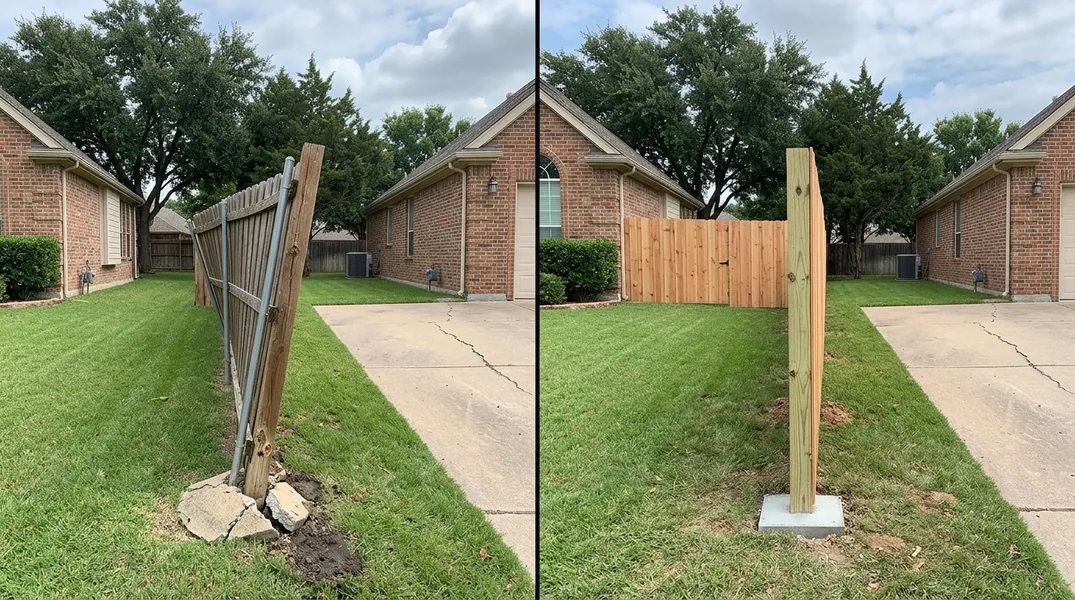
More fences lean in Plano because of what's underfoot. The expansive clay soil swells significantly after spring rain and shrinks hard in summer drought. A fence post set in that soil moves up and down with the water table, working back and forth year after year until the wood fibers around the concrete footing fail and the post racks out of plumb. At the same time, moisture lingers at the ground line where the post meets soil, and wood decays fastest at that exact point. Most leaning fences in this market fail at the post, not the panel. The pickets and rails are often sound; it's the structural posts that need attention.
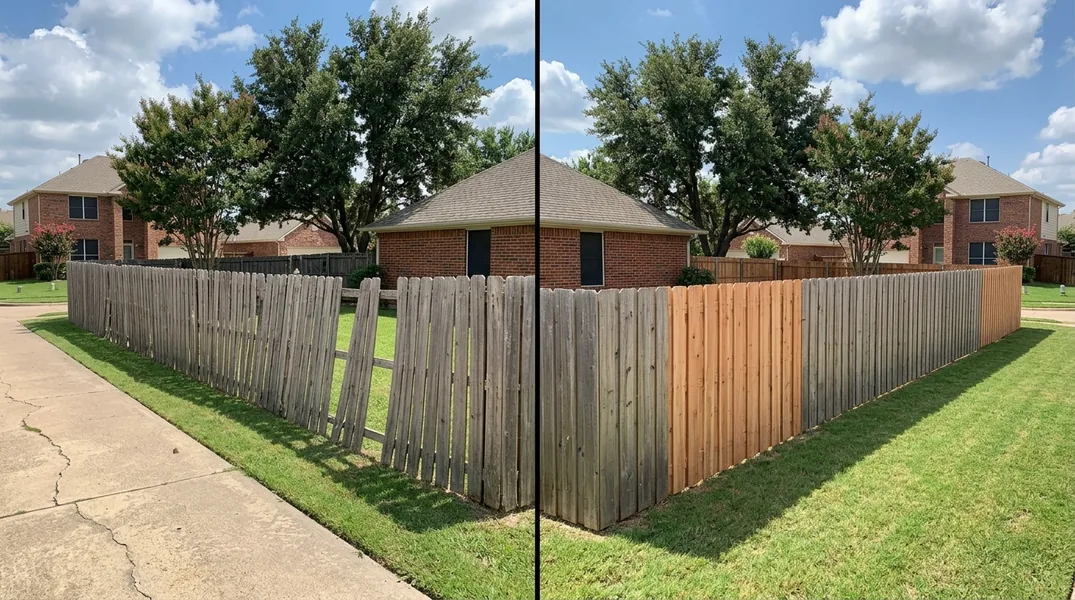
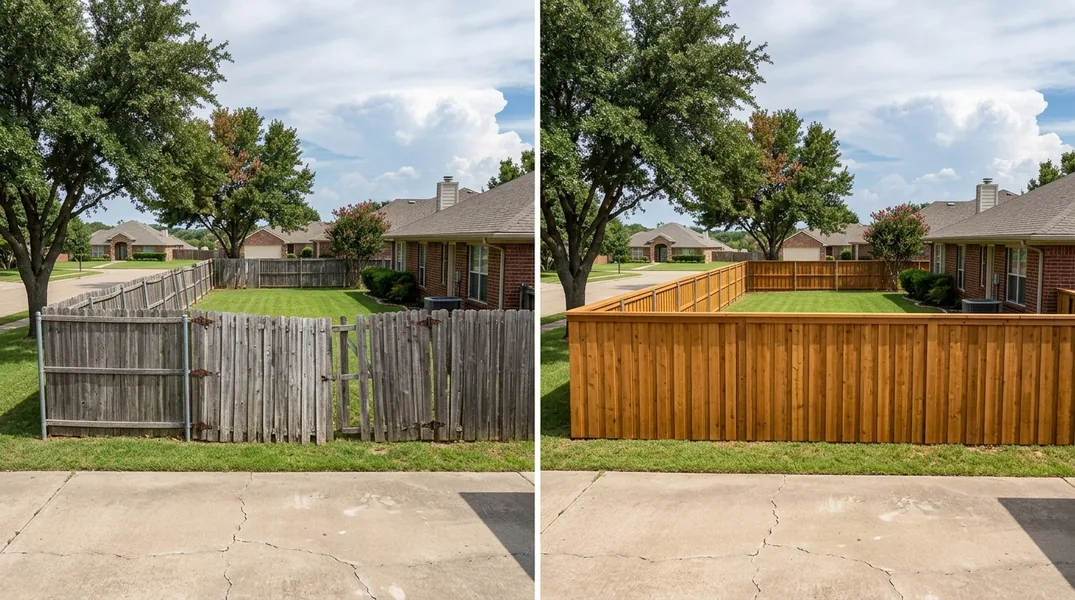
We assess a fence line by walking the entire run and testing every post, not just the one section a homeowner called about. We check whether posts are racked in their footings, whether the concrete itself has heaved, and where wood has decayed at the ground line. We replace wood that has rotted due to moisture. We do not perform termite or pest inspections, apply chemical treatments, or carry out pest control work, which is a separately regulated trade in Texas. That distinction matters: a fence with sound pickets and rails and a handful of failed posts is worth repairing. Resetting or replacing those posts preserves the rest of the fence and saves money over time. A fence where posts have failed along the whole run is at end of life, and repairing it section by section costs more over five years than replacing it once. We quote both options and recommend the one that makes sense for your fence and your budget. Call (940) 326-4616 to discuss what you're seeing, and we'll provide an honest assessment.
Post failure is also why we set posts in concrete and space them correctly during new installation. A tamped post will move with the soil. A post set in concrete, spaced at industry standard, and installed plumb from the start will hold much longer. We also use pressure-treated pine or cedar depending on your material choice and the exposure, because wood selection matters in this climate. The difference between a fence that lasts ten years and one that lasts twenty often comes down to the post installation and the wood species chosen at the start. Fence Post Repair & Replacement is one of our most frequent jobs, and we handle it as a repair when the fence justifies it or recommend full replacement when that's the better path forward.
Storm Damage Fence Repair in Plano
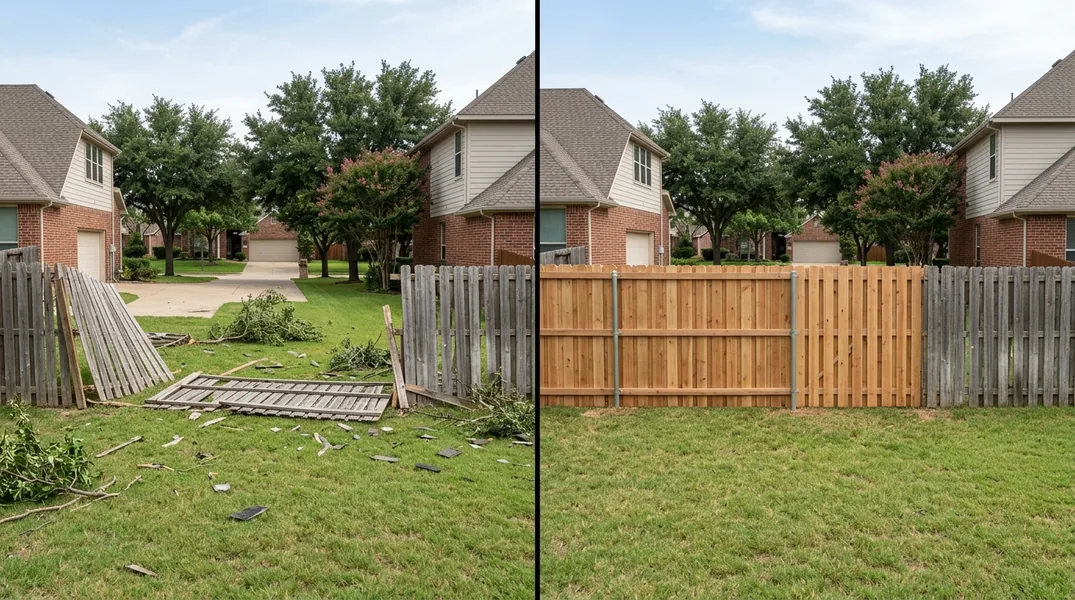
Spring and early summer bring severe weather to North Texas. Straight-line wind, derecho, and hurricane-force gusts can push entire fence runs over, snap posts at grade, and tear panels away. When a fence is rebuilt after a storm, it should come back stronger than it stood before. We provide a free damage assessment, photograph the damage section by section, and prepare a written estimate that documents what failed and what the repair or replacement will cost. You can provide that estimate to your insurance carrier if you choose to file a claim.
We help document the damage for your records and your insurer's review. Coverage decisions rest with your insurance carrier, not with us. We do not represent you to your insurer, act as an adjuster, or guarantee that any repair will be covered. Some policies cover fence damage; others do not, and some have deductibles that make a claim impractical. That's between you and your carrier. What we do is give you an honest assessment and a fair price. If you've had storm damage to your fence, call us for a Storm Damage Fence Repair estimate at (940) 326-4616.
Cedar, Pine, Vinyl or Chain Link: Choosing for This Climate
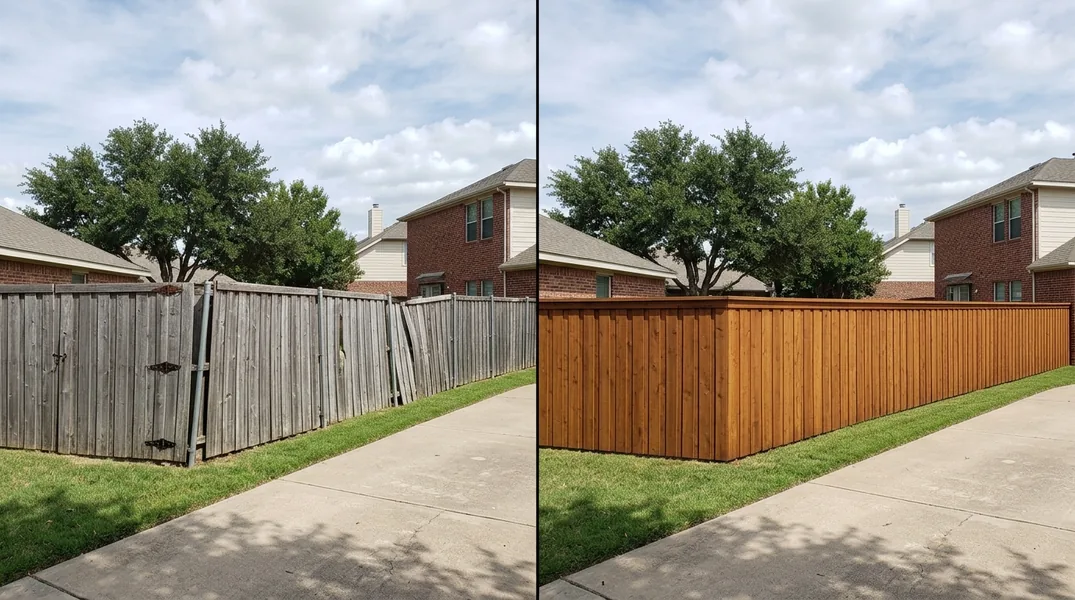
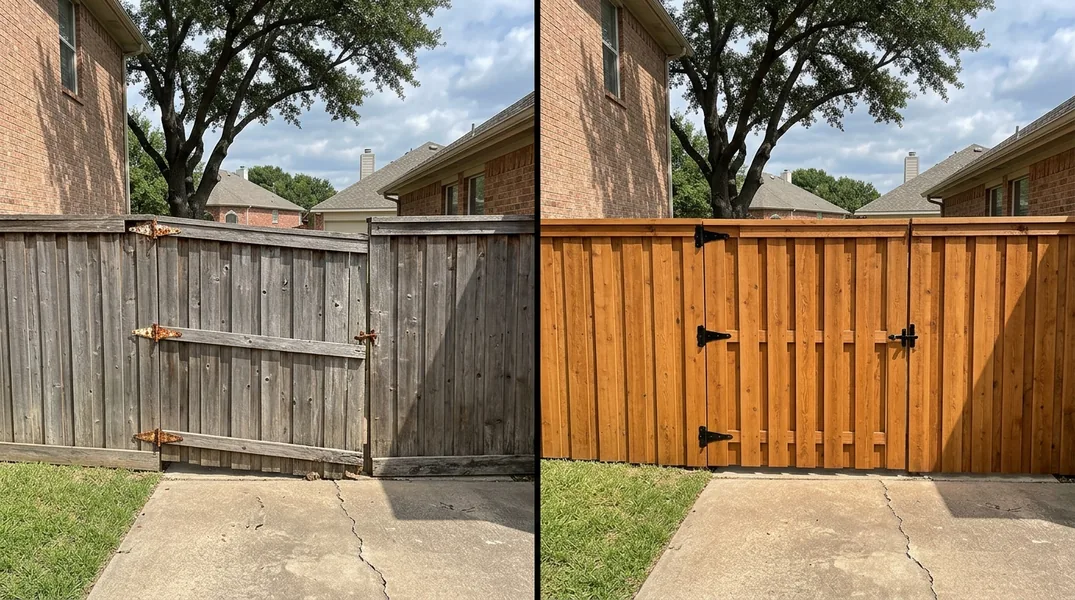
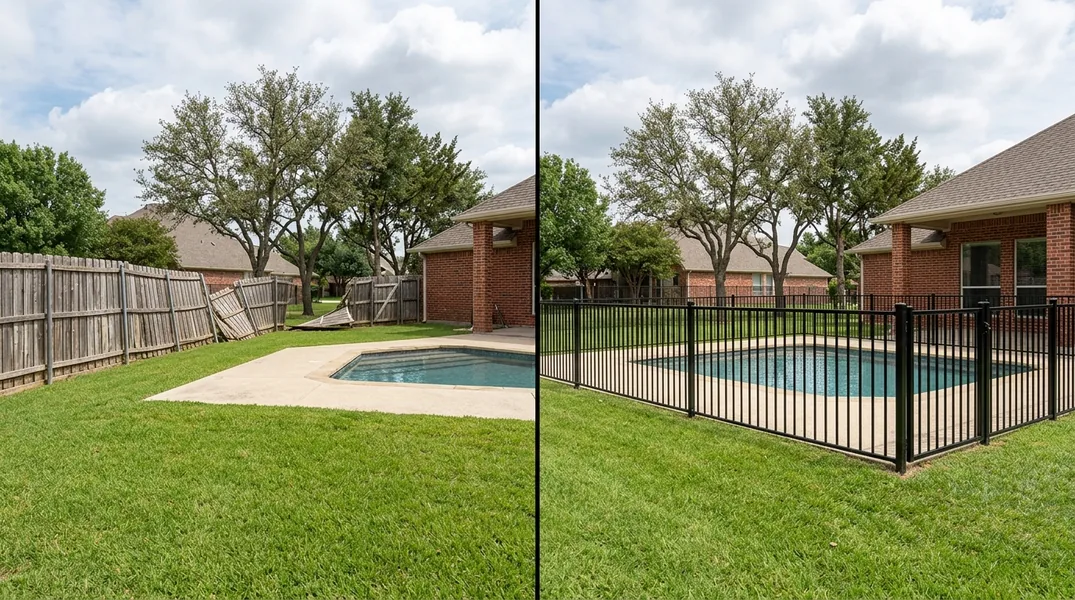
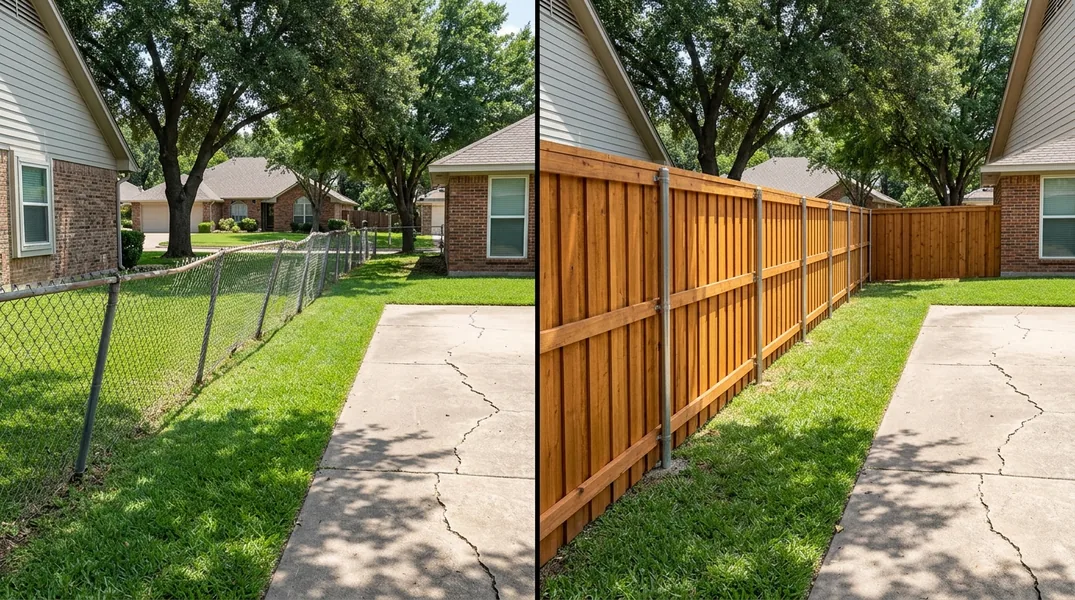
Choosing a fence material means understanding real trade-offs. Cedar is beautiful and weathers to gray over time, but it requires cleaning and re-staining every two to three years to hold color and slow decay. Pressure-treated pine is more affordable, resists rot longer than cedar, and is the smarter budget choice when maintenance isn't in the plan. Vinyl requires almost no maintenance and won't rot, but it can't be stained or painted, and it doesn't work for every style or neighborhood. Chain link is the toughest per dollar spent, and the gauge of the wire and mesh size determine how long it holds under tension; galvanized chain link resists rust better than black powder-coated, but both wear well in this climate. Aluminum and ornamental iron are ideal for pool barriers and front yards where appearance matters, and they can be racked to follow grade on sloped lots. Vinyl & PVC Fence Installation, Chain Link Fence Installation, and Aluminum & Ornamental Iron Fencing each have their place.
Cedar and wood fences need attention. Under this sun and humidity, a cedar fence will begin to gray and weather within the first year. If you want to keep it looking new, plan on cleaning and re-staining every two to three years. That maintenance cycle is what decides whether your wood fence lasts closer to ten years or closer to twenty. We price all work by the linear foot, and that price is determined on site because slope, access, existing tear-out, and gate count all change the scope. A pricing page gives you a general range, but a site visit and measurement will give you an accurate estimate.
Permits, HOA Rules, Property Lines & Pool Barriers
Fence height, setback, and material rules are set by the city or county, and they vary across Greater Plano and the surrounding area. In most jurisdictions, residential fences are limited to four to six feet in height, with shorter limits in front yards and corner visibility zones. Many cities in the area require a permit before fence installation begins, though requirements vary by city and county. If you live in a master-planned community or subdivision with a homeowners association, deed restrictions and HOA architectural standards frequently govern the height, material, and color of your fence, and you will usually need written approval from the association before work starts. It's worth checking your HOA design guidelines and confirming with your neighbors before you proceed. We work from the property line you identify, using your existing survey or plat. Determining a property boundary is the work of a licensed land surveyor, and we do not perform surveys or boundary determinations. If there is any question about where your property line lies or about neighbor consent, we recommend confirming the line and any necessary permissions in writing before we begin.
Pool fencing is installed to meet the pool barrier codes that apply at your address, with self-closing self-latching hardware that meets state and local requirements. We do not certify compliance, and final determination of whether a pool barrier meets code rests with the local building official. No barrier replaces the need for supervision of children and swimmers. Before we set any posts, we request Texas 811 utility locates to mark underground electric, gas, water, and telecom lines operated by major utilities. Locates cover participating operators only and do not mark private lines such as irrigation or landscape lighting, so please tell us about any private underground utilities on your property. Requirements vary by city, county, and property type. Always verify with the Plano building department and your HOA before starting your project. Call (940) 326-4616 for a free estimate, and we'll help you understand what applies to your site.
Ready to get started? Plano Fence Company serves in Plano and surrounding areas. Book your free on-site estimate today.
Get Your Free Estimate