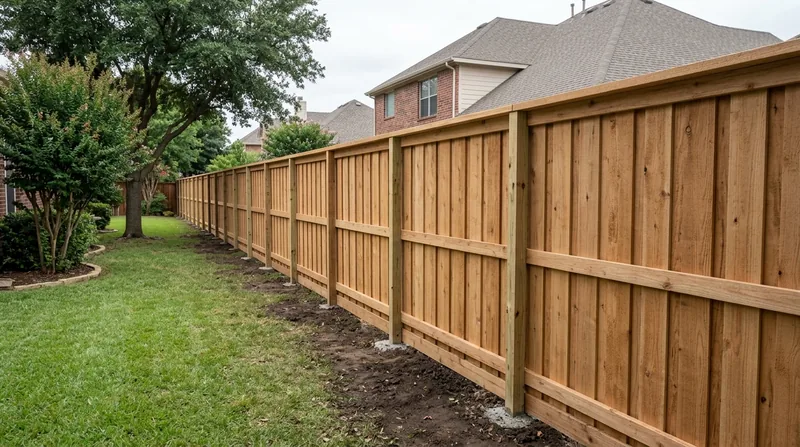




Plano's established residential neighborhoods, from the brick ranchlands west of Central Expressway to the strict HOA subdivisions across West Plano and Frisco, rely on privacy fence installation in Plano to define property lines, screen utility areas, and create outdoor living spaces on the gently rolling Blackland Prairie. The deep, expansive clay soil that swells after spring rain and cracks hard in summer drought demands posts set properly in concrete, and the wide North Texas sky that builds towering supercells through spring severe-weather season means wind-snapped fence panels and storm damage are a familiar sight. Cedar and pressure-treated pine privacy fences, built board-on-board or side-by-side with galvanized hardware, hold up well when installed right, but they need honest assessment before you commit. We have been installing wood and privacy fences since 2015, and we tell you when cedar is worth the spend and when treated pine makes the smarter budget call.
Why Privacy Fencing Matters in Plano's Changing Neighborhoods
Plano's older grid neighborhoods and newer HOA-governed subdivisions both demand privacy fencing that respects deed restrictions, works with local setback and height rules, and survives the North Texas weather cycle. A 6-foot cedar or treated-pine privacy fence creates a true boundary, screens neighbors and street noise, and adds resale value when built to code and finished well. Moisture at the ground line is the main culprit that shortens fence life, so posts set in concrete, not simply tamped soil, make the difference between a fence that lasts 15 years and one that needs major repair in 8.
- A 6-foot privacy fence blocks sight lines from the street and neighboring yards while meeting most Plano and Collin County height rules for residential property.
- Board-on-board construction overlaps pickets to stop light and wind from passing through, and it looks finished on both sides of the fence line.
- Pressure-treated posts set in concrete resist rot at the soil line where moisture damage starts, extending the life of the entire structure.
- Cedar pickets cost more upfront but age to a silver-gray patina and resist decay better than treated pine, though both need honest maintenance planning.
- HOA communities across West Plano and McKinney often restrict fence color, material, and height, so verify your deed restrictions before ordering materials.
Choosing the right material and installation method upfront saves you from costly repairs down the road.
Key info: Most Plano residential lots sit on clay soil that expands and contracts with seasonal rain and drought. Posts set in concrete, not tamped soil alone, stay plumb and resist the heave and settlement that cracks fence panels and loosens rails. This is not optional in North Texas.
For more on fence damage from storm and weather, see our storm damage fence repair page.
How We Install Wood and Privacy Fence in Plano: Step by Step
A solid wood fence installation starts with a property survey or your existing survey to confirm the fence line, then moves to utility locates, post placement, and careful assembly. We use galvanized hardware that resists rust in North Texas humidity, set posts in concrete for stability on clay soil, and finish with cap and trim that sheds water and extends the life of your pickets. The process takes 2 to 5 days depending on fence length and site access.
- Call 811 for a free utility locate to mark underground electric, gas, water, and communications lines before we dig any post holes.
- We confirm the fence line from your survey and mark post locations at standard spacing, typically 6 feet on center for privacy fence.
- We dig post holes to frost depth, set posts in concrete, and allow concrete to cure before attaching rails and pickets.
- We attach stringers (horizontal rails) with galvanized fasteners and install pickets board-on-board or side-by-side, depending on your choice.
- We add cap and trim, check that all panels are plumb and level, and clean up debris from the job site.
This methodical approach prevents the leaning, sagging, and premature rot that shortcuts create.
Local example: A homeowner in the Ridgeview subdivision near Willow Bend wanted a 6-foot cedar privacy fence to screen a corner lot. We confirmed setback rules with the HOA, located utilities with 811, and installed the fence with posts set in concrete on 6-foot centers. The board-on-board pickets finished well on both sides, and the cedar has aged beautifully. That fence is now in its eighth year with minimal maintenance.
Learn more about our fence post repair and replacement services if you need to address existing damage.
Wood Privacy Fence Installation Methods: Board-on-Board, Side-by-Side, and More
| Approach | Description | Best for |
|---|---|---|
| Board-on-Board | Pickets overlap slightly, with each board covering the gap between the previous one and the stringer. Looks finished on both sides. | Properties where both sides of the fence are visible, and you want maximum wind and light blocking. |
| Side-by-Side | Pickets are placed edge-to-edge with no overlap. Simpler and less material, but gaps may show light and wind can pass through. | Budget-conscious jobs where one side of the fence is less visible, or where you prioritize cost over light blocking. |
| Cedar Pickets | Natural rot resistance, ages to a silver-gray patina, premium look and feel. Higher upfront cost, minimal maintenance if left natural. | Visible, high-value properties where the fence is a design element and you plan to keep it for 15+ years. |
| Pressure-Treated Pine | Chemically treated to resist rot and insects, lower cost than cedar, takes stain or paint well. Requires periodic maintenance to stay looking new. | Budget-sensitive installations where you are willing to maintain the fence, or where the fence is screened from view. |
Each method has a honest tradeoff between upfront cost, maintenance burden, and how long the fence looks and performs.
Wood and Privacy Fence Installation Cost in Plano: What to Expect
Privacy fence installation in Plano typically runs from $27 per linear foot for pressure-treated pine, side-by-side construction with standard post spacing. Cedar pickets, board-on-board overlap, and custom details push the price higher, and site conditions like slope, clay soil that requires extra excavation, or mature trees near the fence line add labor and materials. A 150-foot fence might run $4,000 to $6,000 depending on material and method, while a corner lot with racking installation on sloped terrain could cost more.
The best way to know your actual cost is to get 2 to 3 estimates from local contractors who will walk your property, confirm the fence line, and account for your specific soil, slope, and material choices. Permits vary by city within Plano and surrounding areas, and some jurisdictions charge $50 to $150 for a residential fence permit, while others do not require one. We can tell you what your local city or county requires when we visit for the estimate.
Visit our full pricing page for detailed cost breakdowns by material and method, or call us at (940) 326-4616 for a free, no-obligation estimate.
What to Look for When Hiring a Wood Fence Contractor Near Me in Plano
Hiring the right fence contractor starts with checking that they carry full general liability and workers' compensation insurance, and they can provide a certificate of insurance on request. Fence licensing in Texas is set county by county, and Collin County does not require a state license for fence installation, so do not expect a license number. What matters is that the contractor has been in business long enough to understand local soil, weather, and HOA rules, gets multiple estimates so you can compare quality and price, and checks references from recent jobs in your neighborhood.
- Ask for proof of general liability and workers' compensation insurance, and request a certificate of insurance be sent to you before work starts.
- Confirm that the contractor understands your local HOA deed restrictions, setback rules, and height limits before finalizing the design.
- Get at least two other estimates from contractors in Plano or your area so you can compare scope, material, and price side by side.
- Ask for references from at least three recent jobs in Plano or nearby subdivisions, and follow up with those homeowners about quality and timeliness.
- Verify that the contractor will call 811 for utility locates and work from your existing survey to confirm the fence line.
- Confirm the warranty or guarantee on workmanship, and understand what is covered if a panel fails or a post shifts after installation.
A contractor who takes time to understand your property, explains the tradeoffs between cedar and treated pine, and does not push unnecessary upgrades is one you can trust.
Ready to move forward? Contact us for a free estimate or call (940) 326-4616 to discuss your project.
Wood & Privacy Fence Installation in Plano: Pricing Guide
| Service | Price | Details |
|---|---|---|
| Pressure-Treated Pine, Side-by-Side | Starting at $27/ft | Standard 6-foot privacy fence with treated-pine pickets, galvanized hardware, posts set in concrete on 6-foot centers |
| Pressure-Treated Pine, Board-on-Board | Starting at $35/ft | Overlapped pickets for light and wind blocking on both sides, treated pine, galvanized fasteners, concrete-set posts |
| Cedar Pickets, Board-on-Board | Starting at $42/ft | Premium cedar with natural rot resistance, overlapped board-on-board construction, ages to silver-gray patina, minimal maintenance |
| Racking or Stepped Installation on Slope | Add 15 to 25 percent | Sloped terrain requires custom post heights and stepped or racked picket alignment, adds labor and material cost |
| Estimate and Site Visit | Free | Response within 24 hours at (940) 326-4616, includes property walk, fence-line confirmation, and material recommendations |
Indicative pricing, the exact cost depends on square footage, finish, and site access. Free personalized estimate within 24h at (940) 326-4616.


