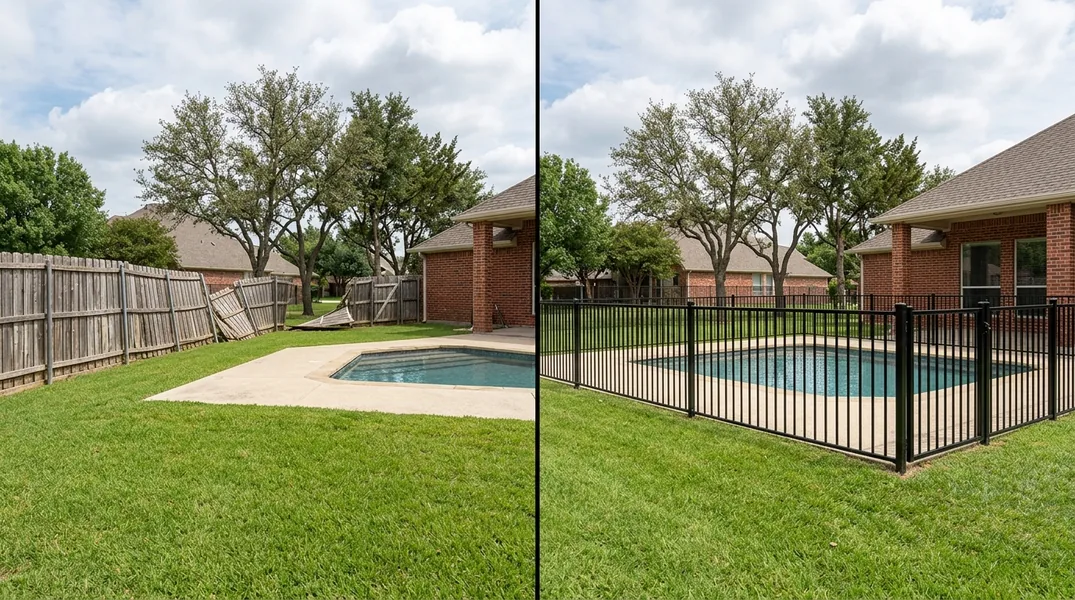
Understanding Texas Pool Fence Code Requirements
If you own a swimming pool in Plano, understanding local and state pool fence code requirements is not optional, it is a legal and safety obligation. Texas has strict regulations governing pool enclosures, and failing to comply can result in significant fines, liability issues, and most importantly, increased risk of accidental drowning. The state of Texas follows guidelines established by the American Society for Testing and Materials (ASTM) and the International Swimming Pool and Spa Code to ensure that pools are properly secured against unauthorized access, particularly by young children.
The primary purpose of these codes is drowning prevention. According to Texas regulations, all residential swimming pools must be completely surrounded by a barrier that prevents access from outside the pool area. This barrier must meet specific height requirements and include a self-closing, self-latching gate. Whether you are installing a new pool or upgrading an existing one, understanding these requirements is crucial. Many homeowners in Plano are surprised to learn that their current fencing may not meet current code standards. If you are unsure whether your pool area is compliant, it is wise to consult with a professional fence installer who understands local regulations.
Pool Fence Height Requirements in Texas
One of the most frequently asked questions about pool fence code requirements concerns the minimum height of the barrier. In Texas, a pool fence must be at least 4 feet tall, measured from the ground to the top of the fence. This height applies to all sides of the pool and must be maintained consistently around the entire perimeter. The fence cannot have gaps, openings, or sections that dip below this 4-foot standard, as even small variations can create access points for children. Additionally, the vertical spacing between fence components (such as pickets or slats) cannot exceed 4 inches, preventing a child from squeezing through or getting stuck between posts.
The horizontal spacing requirements are equally important. If your fence has horizontal rails or supports, the spacing between them must not exceed 4 inches either. This dual requirement, often called the 4-inch rule, applies to both vertical and horizontal openings throughout the barrier. Many homeowners wonder if Wood & Privacy Fence Installation is suitable for pools, and the answer is yes, provided the picket spacing is tight enough to meet code. The same applies to other fence styles. The key is ensuring that no child-sized object can pass through any opening in the fence structure.
Self-Closing Pool Gate Requirements and Installation
A self-closing pool gate is one of the most critical components of a compliant pool enclosure in Texas. The gate must swing shut automatically and latch securely on its own, without requiring a person to manually close or lock it. This automatic closure is essential because it ensures that even if someone forgets to close the gate, the pool remains secured. The gate latch must be positioned at least 54 inches above the ground and on the pool side of the gate, making it inaccessible to young children. The latch mechanism must require a deliberate action to open, such as lifting a handle or pressing a button, and cannot be a simple push-through design.
The self-closing pool gate must also open away from the pool, meaning it swings outward rather than inward toward the water. This design prevents someone from accidentally falling into the pool when opening the gate. The gate itself must be at least 4 feet tall to match the fence height requirement. Many homeowners in Plano choose to install multiple gates if their pool area is large, and each gate must meet the same self-closing and self-latching standards. If you are unsure whether your current gate meets these specifications, professional inspection is recommended. Plano Fence Company can assess your existing gate and recommend upgrades if needed to ensure full compliance with Texas pool safety codes.
Additional Pool Barrier Options Beyond Traditional Fencing
While a traditional fence is the most common pool barrier, Texas code allows for alternative barrier methods that can be used alone or in combination with fencing. Removable pool barriers, such as mesh enclosures or inflatable barriers, can serve as supplementary protection but must still meet specific requirements. Some homeowners use a combination approach, pairing Vinyl & PVC Fence Installation with additional safety features like pool covers or alarms. However, it is important to note that pool covers and alarms are not considered primary barriers under Texas code and cannot replace a proper fence enclosure.
Another option gaining popularity is the use of Aluminum & Ornamental Iron Fencing for pool areas. Ornamental aluminum fencing offers an attractive aesthetic while meeting all safety requirements. The spacing between pickets must still comply with the 4-inch rule, and the overall height must reach 4 feet. Some homeowners also consider Chain Link Fence Installation for pool enclosures, which is durable and cost-effective. Regardless of the material you choose, the barrier must completely enclose the pool and meet all Texas safety standards. Professional installation ensures that your chosen barrier style is both compliant and properly maintained over time.
Pool Fence Installation Near Me: When to Call a Professional
Installing or upgrading a pool fence is not a project to approach casually. Local building codes in Plano require that pool enclosures meet specific standards, and improper installation can result in code violations, failed inspections, and potential liability. A professional fence installer understands the nuances of pool safety codes and can ensure that your barrier meets every requirement. They will measure heights accurately, verify spacing compliance, install self-closing gates correctly, and obtain any necessary permits before beginning work.
When you hire a professional contractor like Plano Fence Company, you gain peace of mind knowing that your pool enclosure has been installed to code and will pass inspection. Professional installers also stay updated on any changes to local regulations and can advise you on the best materials and designs for your specific pool layout. Whether you need a complete new pool fence or upgrades to an existing barrier, reaching out for a free estimate is the first step. You can call Plano Fence Company at (940) 326-4616 to discuss your project and learn about available options.
Maintaining Your Pool Fence for Long-Term Compliance
Installing a compliant pool fence is just the beginning. Ongoing maintenance is essential to ensure that your barrier continues to meet Texas code requirements over time. Wood fences may develop gaps as boards warp or settle, vinyl fencing can crack or warp in extreme heat, and gates may become misaligned or fail to close properly. Regular inspections, ideally twice per year, help identify issues before they become safety hazards or code violations. Check that picket spacing remains within the 4-inch limit, verify that the fence height has not settled below 4 feet, and test that the self-closing gate operates smoothly and latches securely.
Weather, wear, and age all take a toll on pool enclosures. In the Texas climate, UV exposure and temperature fluctuations can accelerate deterioration, particularly with wood fencing. If you notice any damage, loose components, or operational issues with your pool gate, address them promptly. Many homeowners find that scheduling professional maintenance annually helps extend the life of their pool fence and ensures continued compliance. If your fence has developed significant damage or no longer meets code, replacement or major repairs may be necessary. Contact Plano Fence Company at (940) 326-4616 to schedule an inspection and discuss maintenance or upgrade options for your pool enclosure.
Looking for a professional fence contractor in Plano? Plano Fence Company responds fast for all your fence needs.
Get a Free Quote